
Getting ready for your first day hike doesn’t need to be overwhelming. You don’t need expensive gear or a 60-litre pack to have a safe, comfortable time on the trail. What you do need is the right basics – enough to handle a weather shift, stay hydrated, and deal with a minor mishap if one comes up.
This article is a practical checklist you can adjust to fit your hike. Short trail on a warm afternoon? You’ll carry less. Longer route with elevation gain or unpredictable weather? A few extra items make a real difference. Season, trail length, and where you’re hiking all shape what goes in your pack.
There’s no single perfect kit. Think of this as a starting point, not a strict prescription. The goal is to feel prepared without hauling unnecessary weight – and to actually enjoy the hike.
Start With the Core Day-Hike Essentials

These must be nailed down first before worrying about trekking poles or getting a GPS watch: these are de facto essentials from the school of hard knocks, having been encountered by you or someone else.
A daypack from 20 to 30 litres suits most day hikes comfortably, minus the feeling that you’ve been hauling your entire wardrobe. If you tend to feel warm, opt for a ventilated back panel. Fit is more important than a name.
Water is mandatory. A rule of thumb is 500ml of water consumption per hour of hiking, so two litres’ capacity will suffice for just about any half-day trail. Any basic, reusable water bottle is awesome, and a hydration bladder opening up in the pack could be convenient but not necessary when you’re starting out.
Pack more food than you think you’ll need. Trail mix, a sandwich, or an energy bar-just the basics will do. Bonking five miles into a hike is a miserable time.
Navigation means knowing where you are. Download your trail map offline using AllTrails or Gaia GPS before you leave home. Cell service disappears faster than you’d expect in the backcountry.
A portable battery bank keeps your phone alive. Sunscreen and sunglasses handle UV exposure. A basic first aid kit – bandages, blister pads, pain reliever – handles the small stuff that always seems to happen.
Toss in a lightweight fleece or rain shell. Weather shifts fast on exposed ridges, even in July.
Wear Clothing and Footwear That Match the Trail
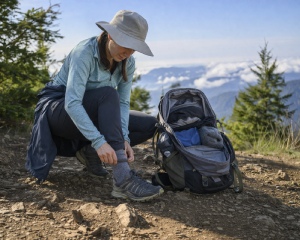
What you wear matters just as much as what you carry. The wrong outfit can turn a pleasant morning hike into a miserable, blister-ridden slog.
Skip cotton on anything longer than a short neighbourhood walk. Cotton absorbs sweat and stays wet, which feels cold and heavy fast. Moisture-wicking fabrics like polyester or merino wool pull sweat away from your skin and dry quickly. That difference is huge on a warm climb.
Layering is the smarter approach for most Canadian trails. Start with a moisture-wicking base layer, add a light mid-layer for cool mornings, and pack a waterproof shell in case weather shifts. Mountain conditions change quickly, even in summer.
A sun hat or buff handles heat and wind. Wool or synthetic hiking socks prevent blisters better than anything else in your kit. Two pairs in your bag is never a bad idea.
For footwear, trail runners work well on groomed paths and light terrain. Hiking shoes offer more ankle support and grip on rockier ground. Full boots are best for rough, uneven, or wet trails. Whatever you choose, break them in before the hike. New boots on a long trail are a recipe for painful feet by kilometre three.
Pack the Safety and Just-in-Case Items Beginners Often Forget
Most people pack snacks and sunscreen without a second thought, then head out with zero plan for what happens if things go sideways. That’s where this list matters most.
A headlamp is non-negotiable. Trails look very different at dusk, and a phone flashlight drains your battery fast. Toss in an emergency blanket too. They fold to the size of a deck of cards and can genuinely save you if temperatures drop unexpectedly.
Carry a whistle. Three short blasts is the universal distress signal, and your voice will give out long before a whistle does. A small multi-tool earns its weight on almost every hike. Blister care – a few adhesive bandages and some moleskin – belongs in every pack, because blisters hit faster than most beginners expect.
Bug protection is easy to skip until you’re deep in mosquito territory in late June. Tissues and a small waste bag round out a basic personal hygiene kit for when nature calls away from facilities.
Use This Checklist to Pack Smarter, Not Heavier
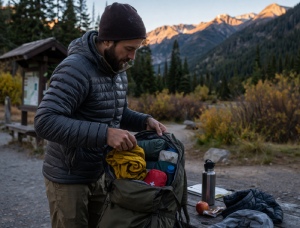
Think of your gear list as a starting point, not a shopping list you follow blindly every time.
A two-hour loop at a local conservation area needs far less than a full-day trek in Algonquin or the Rockies. For shorter walks under three hours, you can trim aggressively: a small daypack, water, a snack, your phone, and a basic first aid kit cover most situations. Longer hikes in shoulder season – think October in Ontario or March in BC – demand more thought around layering, rain gear, and extra food.
Hot summer days shift your priorities toward sun protection and water carry. Shoulder season hikes shift them toward warmth and waterproofing. Popular, well-marked trails need less navigation gear. Quieter backcountry-style routes warrant a map, compass, and a charged SOS device.
Before you leave, run through a quick pre-hike routine. Check the forecast the night before and again that morning. Confirm your route distance and elevation. Tell someone where you’re going and when you expect to be back. Test your headlamp and check your water supply. Then take one honest look at your pack and pull out anything you haven’t used on the last three hikes. Lighter is almost always better.
The Best Hiking Gear Is What You Will Actually Carry
Keep roaring language at a minimum, to start with. A fantastic day-hike kit would not call for the pack with the highest technical level around, or a closet-full of merino wool. Just make sure you pack for the essentials and for comfort and include your plan in the event of an emergency. Pack along your water, snacks, and first aid kit-full, plus those appropriate layers for the weather. Everything else is up to your personal taste, depending on where you will be hiking and for how long. The hiker who learns this fastest would be the one who sets foot on the trail, discovers for themselves what they end up actually using and quietly drops the unnecessary bits the following time. Your checklists will just get smaller experiencially-anything from a well-marked two-hour loop to a full-day marathon hike in ever-changing weather conditions. It is true that it can be quite overwhelming to look at these gear lists, but the trail will show you the way fairly quickly to the gear you really need.
